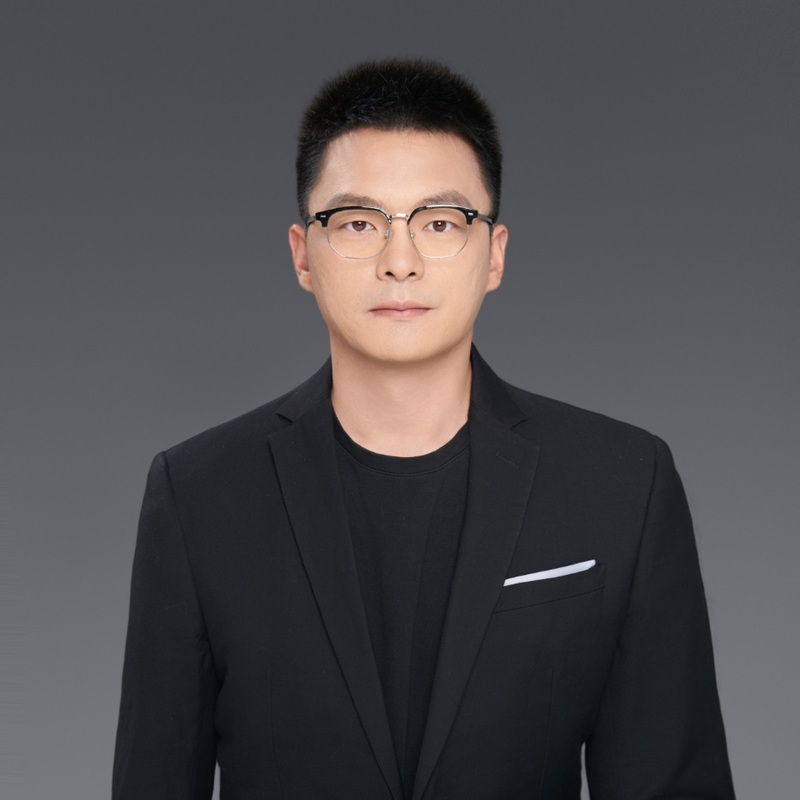
Principal Investigator; Tenure-track Assistant Professor; Ph.D Advisor
Shanghai Institute for Advanced Immunochemical Studies (SIAIS), ShanghaiTech University
Email: zhanghq@@shanghaitech.edu.cn
Research Interests:
Replication/transcription mechanismsinvirusesandeukaryotes; antiviral drug development; RNA transcription in eukaryotes

Education
2013-2016: Ph.D. in Life Sciences, School of Life Sciences, Tsinghua University, Beijing, China;
2010-2013: Master of Engineering, Institute of Biophysics, Chinese Academy of Sciences, Beijing, China
2006-2010: B.S. in Biotechnology, Hebei University of Technology, Tianjin, China
Professional Experience
2025.12-present: Principal Investigator & Tenure-track Assistant Professor, SIAIS & SLST (School of Life Science and Technology), ShanghaiTech University, Shanghai, China
2021.8-2025.12: Co-Principal Investigator, Research Associate Professor, SIAIS, ShanghaiTech University, Shanghai, China;
2017.1-2021.8: Research Assistant Professor, SIAIS, ShanghaiTech University, Shanghai, China
2019.4-2020.9: Visiting Associate Professor, Department of Structural Biology, Stanford University School of Medicine, USA
2017.12-2018.6: Visiting Associate Professor, Department of Structural Biology, Stanford University School of Medicine, USA
2016.7-2016.12: Senior Research Scientist, Shanghai Hengrui Pharmaceutical Co., Ltd., Shanghai, China
Research Interests
My research utilizes biochemistry, molecular biology, cell biology, and structural biology to elucidate: The molecular mechanisms of viral transcription and replication; Development of antiviral therapeutics; Mechanisms of eukaryotic transcription and epigenetic modifications.
My recent work focuses on understanding the RNA synthesis mechanisms of highly pathogenic non-segmented negative-sense RNA viruses (nsNSVs), such as measlesvirusand Nipah virus, and discovering antiviral drugs targeting these processes.
Honors and Awards
1. Young Scientist Presentation Award, 2025, 11th East China Structural Biology Conference.
2. First Prize for Best Presentation, Heqiao Zhang, 2025, Shanghai Society for Biochemistry and Molecular Biology.
3. Life Sciences Research Award, 2016, Tsinghua-Peking Joint Center for Life Sciences
4. Comprehensive Excellence Scholarship, 2014, Tsinghua University.
Research Grants
1. National Natural Science Foundation of China, Young Scientists Project Grant No. 31700665 (January 2018 – December 2020)
2. Shanxi Key Laboratory Open Project Grant No. 202104010910006 (October 2021 – October 2022)
Selected Publications
1. Wang, Y., Zhao, L., Zhang, Y., Gao, X., Wang, Y., Shi, W., Kornberg, R.D#., and Zhang, H#. (2025). Structures of the measles virus polymerase complex with non-nucleoside inhibitors and mechanism of inhibition. Cell188(18), 4913-4923. (#corresponding author).
2. Shi, W., Zhao, L., Wang, Y., Zhang, Y., Liu, S., Wang, Y., Kornberg, R.D., and Zhang, H#. (2025). Mechanistic insights into histone recognition and H3K14 acetylation by the NuA3 histone acetyltransferase complex. Nature Communications. 10.1038/s41467-025-67049-0. (#corresponding author)
3. Wang, Y., Zhao, L., Zhang, Y., Wang, Y., Tang, J., Liu, S., Gao, H., Zhang, X#., Zinzula, L#., Kornberg, R.D#., and Zhang, H#. (2024). Cryo-EM structure of Nipah virus RNA polymerase complex. Science Advances10(50), eadr7116. (#corresponding author).
4. Wang, X., Wang, Y., Liu, S., Zhang, Y., Xu, K., Ji, L., Kornberg, R.D#., and Zhang, H#. (2023). Class I histone deacetylase complex: Structure and functional correlates. Proc Natl Acad Sci U S A 120, e2307598120. (#corresponding author).
5. Ji, L., Zhao, L., Xu, K., Gao, H., Zhou, Y., Kornberg, R.D#., and Zhang, H#. (2022). Structure of the NuA4 histone acetyltransferase complex. Proc Natl Acad Sci U S A 119, e2214313119. (#corresponding author).
6. Zhang, H., Chen, D.H., Mattoo, R.U.H., Bushnell, D.A., Wang, Y., Yuan, C., Wang, L., Wang, C., Davis, R.E., Nie, Y., Kornberg, R.D. (2021). Mediator structure and conformation change. Molecular Cell 81, 1781-1788 e1784.
7. Wang, Y., Graham, L.A., Han, Z., Eves, R., Gruneberg, A.K., Campbell, R.L., Zhang, H#., and Davies, P.L.# (2020). Carrot 'antifreeze' protein has an irregular ice-binding site that confers weak freezing point depression but strong inhibition of ice recrystallization. BiochemJ 477, 2179-2192. (#corresponding author).
8. Wang, Y., Zhang, F., Nie, Y#., Shang, G#., and Zhang, H#. (2019). Structural analysis of Shigella flexneri bi-functional enzyme HisIE in histidine biosynthesis. Biochem Biophys Res Commun 516, 540-545. (#corresponding author).
9. Zhang, H*., Lin, X*., Han, Z., Qu, L.J., and Chai, J. (2016). Crystal structure of PXY-TDIF complex reveals a conserved recognition mechanism among CLE peptide-receptor pairs. Cell Res 26, 543-555. (*co-first author).
10. Zhang, H*., Lin, X*., Han, Z., Wang, J., Qu, L.J., and Chai, J. (2016). SERK Family Receptor-like Kinases Function as Co-receptors with PXY for Plant Vascular Development. Mol Plant 9, 1406-1414. (*co-first author).
11. Zhang, H., Han, Z., Song, W., and Chai, J. (2016). Structural Insight into Recognition of Plant Peptide Hormones by Receptors. Mol Plant 9, 1454-1463.
12. Lu, D*., Shang, G*., Zhang, H*., Yu, Q*., Cong, X., Yuan, J., He, F., Zhu, C., Zhao, Y., Yin, K., et al. (2014). Structural insights into the T6SS effector protein Tse3 and the Tse3-Tsi3 complex from Pseudomonas aeruginosa reveal a calcium-dependent membrane-binding mechanism. Mol Microbiol 92, 1092-1112. (*co-first author).